Ivanhoe
Ivanhoe, Sir Walter Scott's historical romance, becomes an unlikely instrument of moral education in Harper Lee's To Kill a Mockingbird. When Jem Finch, in a fit of rage, decapitates Mrs. Henry Lafayette Dubose's camellia bushes after she insults his father, Atticus sentences him to read aloud to the bedridden old woman for two hours every afternoon, including Saturdays, for a full month. The book Jem carries up the steep front steps of Mrs. Dubose's house is Ivanhoe, a choice that seems almost cruelly ironic: a tale of chivalric adventure and knightly honor is to be the vehicle for a lesson in a very different kind of courage.
The Reading Sessions
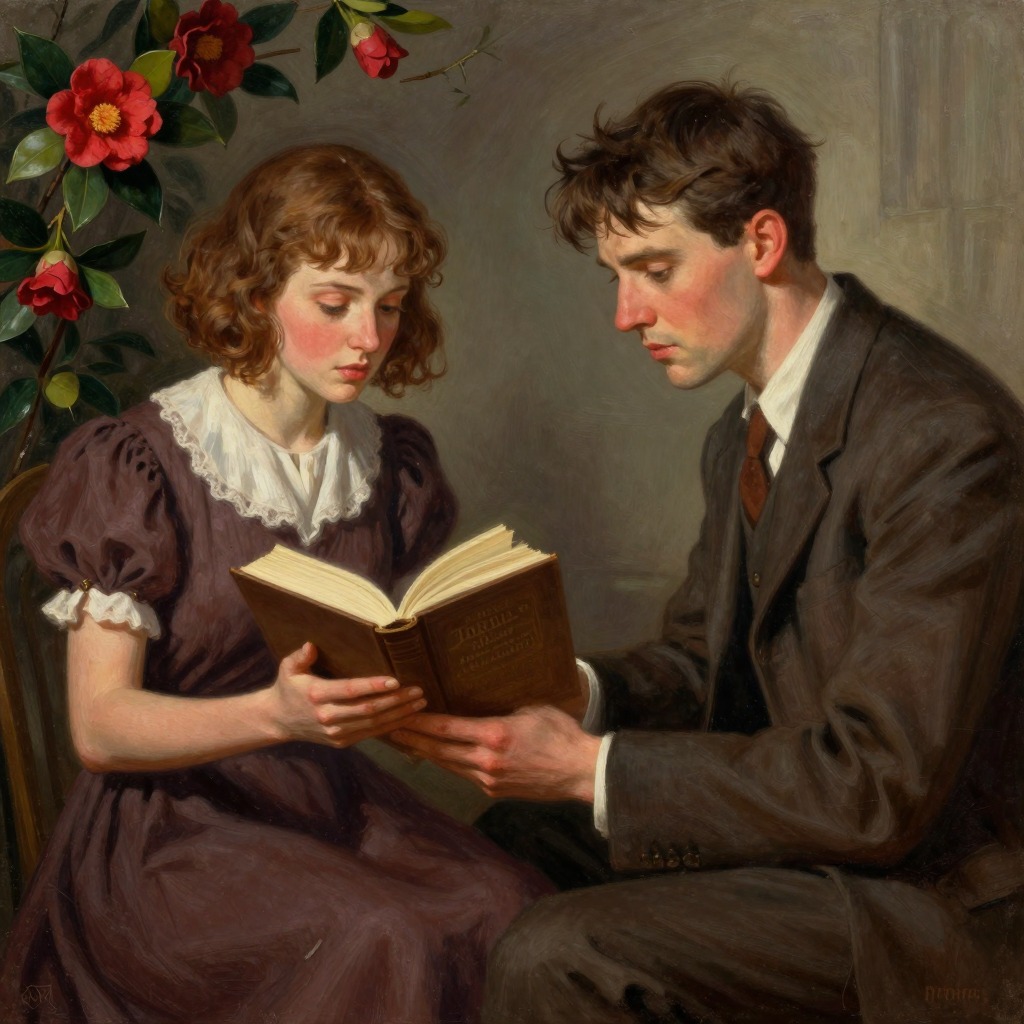
Jem, armed with Ivanhoe and what Scout calls "full of superior knowledge," knocks at the second door on the left of the dark, oppressive hallway. Inside, Mrs. Dubose lies under a pile of quilts, her face the color of a dirty pillowcase, her mouth working independently. Jem sits in a cane-bottom chair and opens the book, reading perhaps twenty minutes at a stretch. He reads too fast for Scout to follow, and when he encounters a word he doesn't know, he tries to skip it, but Mrs. Dubose catches him and forces him to spell it out. The sessions follow a grim pattern: she begins by hounding Jem on her favorite subjects—her camellias and Atticus's "nigger-loving" propensities—then grows increasingly silent, her head moving slowly from side to side, her mouth opening and closing, cords of saliva collecting on her lips. The alarm clock on her marble-topped washstand, standing on three tiny legs, becomes the signal for their release. As the weeks pass, the clock goes off a few minutes later each day, and Mrs. Dubose is well into one of her fits by the time it sounds. Jem reads on, his voice the only steady thing in the room, while the old woman's body wages its private war.
The Lesson in Courage
Atticus reveals the true purpose of the reading sessions after Mrs. Dubose dies. She was a morphine addict, prescribed the drug as a painkiller for years, and had resolved to break herself of the addiction before she died. Her fits were withdrawal symptoms. "Her whole mind and body were concentrated on that alarm clock," Atticus explains. The reading was a distraction, a way to keep her conscious and fighting through the final weeks of her life. Atticus tells Jem he wanted him to see what real courage is: "It's when you know you're licked before you begin but you begin anyway and you see it through no matter what. You rarely win, but sometimes you do. Mrs. Dubose won, all ninety-eight pounds of her." The chivalric world of Ivanhoe, with its knights and tournaments, gives way to a far more profound definition of heroism—one measured not by swords and shields but by the will to endure agony for the sake of a self-imposed moral victory.
The Camellia
After Mrs. Dubose's death, Atticus brings home a candy box. Inside, surrounded by wads of damp cotton, lies a white, waxy, perfect camellia—a Snow-on-the-Mountain. Jem's reaction is explosive: "Old hell-devil, old hell-devil!" he screams, flinging it down. The flower is the very kind he had destroyed, and its pristine beauty seems a taunt. But Atticus interprets it differently: "I think that was her way of telling you—everything's all right now, Jem, everything's all right." Jem picks up the camellia, and when Scout goes to bed, she sees him fingering the wide petals. The object that began as a symbol of his rage and punishment has been transformed into a token of reconciliation and respect, a physical reminder of the courage he witnessed in the most unlikely of teachers.